


 Wenjoy Editorial
09 Nov 2026
Farmhouse
How Security Deposits Work on UAE Holiday Homes
The short answer — what the deposit is, what is normal, and the one rule that protects you
A holiday-home security deposit is a refundable amount held against damage during your stay. It is not part of the price. On Wenjoy's 44 audited listings the displayed deposits run from AED 0 to AED 1,000, set by each vendor and collected in cash at check-in, never online. The habit that protects you: inspect the property when you arrive, and report anything already damaged before you settle in.
Try to look this up and you hit fragments. One operator's terms page. Another's FAQ. A Dubai regulator PDF. Each describes one company's practice as if it were the whole market, and none answers the guest's actual questions: how much is normal, how is it taken, what can it be charged for, when does it come back? This article organises those fragments. Where Wenjoy practice is described, it comes from Wenjoy's own Security Deposit Policy, re-read on the day this was written. The policy page is the legal text; this is the plain-language layer above it.
How much is normal? Farmhouses and whole homes vs city apartments vs monthly stays
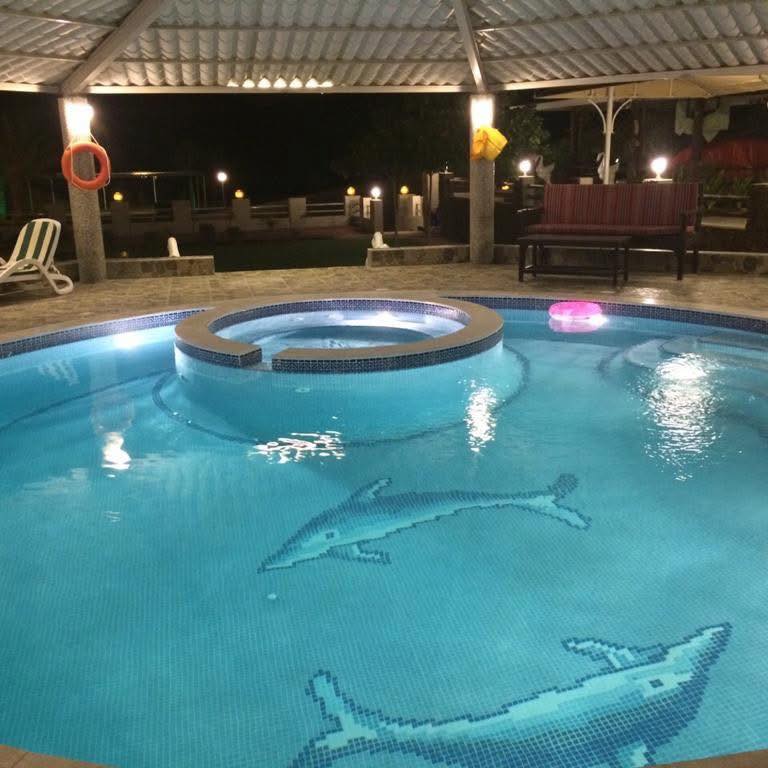
Begin with what can be verified. Across all 44 Wenjoy listings audited on 21 October 2026, displayed deposits run from AED 0 to AED 1,000. Wenjoy does not set, standardise or cap the amount — its policy says so plainly — so each figure is a vendor's own choice. Most listings sit at AED 1,000. The Quiet Nature Farm Stay in Ras Al Khaimah, a 4-bedroom Muwailha farmhouse for up to 15 guests with an indoor air-conditioned pool, is one of them.
Below that mode, the odd numbers are the point. The Monochrome Villa with Private Pool in Al Dhait shows AED 999 — not a typo, just a vendor-set figure. The Cozy 1-Bed Countryside Farm Escape in Abu Dhabi shows AED 500. And the Private Room | Swimming Pool & Farmhouse Experience in RAK shows AED 0 as listed — a displayed zero on that one listing. Not a promise about any other property.
Leave the farmhouse segment and the numbers change. In operator terms sampled for this research, Bespoke Residences lists AED 2,000 for studio and one- to two-bedroom apartments, and Trip.com operator policies repeatedly show a fixed AED 1,000. Monthly stays are a different product altogether: the same operator's terms put monthly deposits at AED 5,000–8,000. That figure tells you nothing about a two-night farmhouse booking. Do not let it scare you — and do not expect a farmhouse figure on a monthly contract.
The listings that show no deposit — what "no deposit amount displayed" actually means
Five of the 44 audited listings show no deposit line at all in their price details: the Hillside Farmhouse With Grand Majlis in Hatta, the Luxury Farmhouse With Pool And Zoo in Masafi, Panoramic Views With Huge Garden in Abu Dhabi, the 5-Star Mountain Farm With Pool in Hatta, and the Private Room | Bamboo Farmhouse Stay in Ras Al Khaimah.
Read that silence correctly. It means no amount was displayed at audit — not that no deposit applies. The vendor may set one before your stay, or collect one under the listing's rules. So confirm the position with the host before you arrive, and the amount — if there is one — is never a surprise at the door. Never let anyone convert "not displayed" into "no deposit". Those are different sentences.
How the deposit is taken — cash at the property on Wenjoy; card holds elsewhere
On Wenjoy the mechanics are fixed by policy. The deposit is collected in cash directly by the vendor at the property upon check-in. Not online. Not through the Wenjoy payment gateway. Not in advance — vendors may collect it only at check-in. Arrive prepared to pay it in cash if your listing specifies one.
The vendor must issue a written or verbal acknowledgement of the amount received. Ask for a written receipt anyway. Ten seconds, and you hold a record of exactly how much changed hands: amount, listing, date. If a disagreement happens later, that scrap of paper is where it starts to get resolved.
The wider market also uses card pre-authorisation holds, where an amount is ring-fenced on your card rather than paid. Daniels Holiday Homes' terms, for example, describe collection in person by cash or card, with a Stripe pre-authorisation for self check-in. Dubai's official Leasing Out Holiday Homes User Guide (§5.3) allows a licensee to take a deposit before move-in by card or mandate, and requires that guests be warned non-compliance may be charged against it. Neither method is wrong. What matters is knowing which one your booking uses before arrival day.
The checkout inspection — how deductions are decided, and the habit that protects you
One event decides whether the deposit comes back: the inspection at checkout. Under Wenjoy's policy the vendor inspects when you leave. No damage beyond normal wear and tear? The full deposit is returned at checkout.
Deductions are limited to defined ground:
- Damage to the property, furniture or fittings beyond normal wear and tear
- Missing items from the property inventory
- Excessive cleaning beyond standard post-stay cleaning — after smoking in a non-smoking property, for example
- Costs set out in the vendor's property rules
Minor scuffs and light marks from regular use are explicitly not damage. And the vendor must be able to provide evidence of any damage claimed — photographs, repair receipts — if you ask for it.
Your protection is built at the other end of the stay. The policy strongly advises a brief inspection at check-in, reporting any pre-existing damage to the vendor immediately, before settling in — and warns that damage not reported at check-in may be treated as yours at checkout. So walk the property. Photograph anything already marked. Message the host while you are standing there. Five minutes on arrival is worth more than any dispute later. For what happens when plans change rather than property, our guide to how to inspect cancellation terms covers that side, and Wenjoy's refund and cancellation policy is the reference text.
When the money comes back — at checkout, the 7-day rule, and market practice
The clean case is simple. Inspection passes, deposit returns at checkout, in full. Two timelines cover everything else:
- Damage found, cost unknown on the spot. A repair quote is needed, an assessment is pending. The vendor may withhold the deposit for up to 7 days while the cost is established.
- Cost established. The damage amount is deducted, and the remaining balance is returned within 7 days of that final assessment.
That is a defined outer limit, not an open-ended hold. Dubai's DET guide points the same way for licensed operators generally: the balance must be released or returned "as soon as possible following their departure". Elsewhere the timelines stretch — FAM Living's terms allow refund within 14 working days of approval, after inspection — one more reason to know your own booking's stated terms rather than assuming a market standard that does not exist.
Dispute a withholding? Try the vendor first. Then contact Wenjoy within 7 days of checkout, with your booking reference and evidence; Wenjoy responds within 5 business days, acting as mediator. The policy is candid about the limit: deposits move in cash between guest and vendor, so Wenjoy cannot enforce a refund — it assists in mediation where possible. Know that before you book, not after.
If damage costs more than the deposit
The deposit caps what is held. It does not cap liability. If damage genuinely costs more than the amount held, Wenjoy's policy gives the vendor the right to seek the remaining amount directly from the guest — first amicably, and only if that fails through the appropriate legal channels under UAE law. Wenjoy may provide booking information to assist that process, but does not act as a financial guarantor beyond the deposit.
Which brings the argument full circle: a documented starting condition protects you from claims that were never yours. Before any booking, follow the habit in our verify-listing-before-booking checklist — check the deposit line on the listing page itself — and if anything about it is unclear, contact Wenjoy before you pay.
Frequently Asked Questions
How much is the security deposit on a UAE holiday home or farmhouse? On Wenjoy's 44 audited listings, displayed deposits run from AED 0 to AED 1,000, with AED 1,000 the most common figure; each amount is set by the individual vendor and shown on the listing before booking. City apartment operators often charge more — AED 2,000 appears in sampled terms — and monthly stays are a different product with deposits of AED 5,000–8,000. All listing figures as displayed on 21 October 2026.
Is the security deposit paid online or at the property? On Wenjoy, at the property: the vendor collects it in cash at check-in, never online and never in advance, and must acknowledge the amount received — ask for a written receipt. Elsewhere in the market, some operators use card payments or pre-authorisation holds instead; your booking's terms state which applies.
When do I get my security deposit back? On Wenjoy, at checkout, in full, when the checkout inspection finds no damage beyond normal wear and tear. If a damage cost cannot be determined at checkout, the vendor may withhold the deposit for up to 7 days while it is assessed, and must return the balance within 7 days of the final assessment.
What can a host deduct from a security deposit? Damage to the property, furniture or fittings beyond normal wear and tear; missing inventory items; and excessive cleaning beyond standard post-stay cleaning — for example after smoking in a non-smoking property. Minor scuffs and light marks from regular use are not damage. The vendor must be able to provide evidence, such as photographs or repair receipts, if you request it.
What if my listing shows no security deposit amount? It means no amount was displayed — not that no deposit applies. Five of Wenjoy's 44 audited listings showed no deposit line at audit. Confirm the position with the host before you arrive so any deposit is agreed in advance, never a surprise at the door.
What happens if damage costs more than the deposit? The vendor may seek the remaining amount directly from you — amicably first, then through legal channels under UAE law if unresolved. If you dispute a withholding, contact Wenjoy within 7 days of checkout with your booking reference and evidence; Wenjoy mediates, though it does not hold the funds and cannot enforce a refund.


Search
Recent Posts

Top Farmhouse Stays





Book a UAE Farmhouse
Verified hosts, instant booking, AED pricing. From private-pool villas to group-size farmhouses across all 7 Emirates.
Browse Farmhouses →